Mail forwarding for Australian grey nomads on the road
May 22, 2026
Michael Tippett
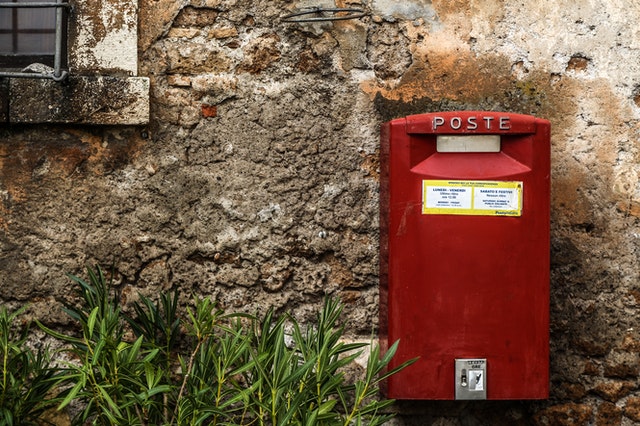
Meet John and Sue. He is 64, recently retired from a career in civil engineering. She is 62, finished part-time work at a medical practice six months earlier. They sold their Ashgrove home in Brisbane in late 2023, bought a 23-foot caravan and a dual-cab ute, and set off to do what they had been planning for fifteen years: a full lap of Australia.
The plan was three years. Maybe more. They were in no hurry. Their children are adults with their own homes. Their superannuation funds were drawing down. The freedom, after four decades of mortgages and school fees and office politics, was genuinely intoxicating. The only part of the plan they had not thought through carefully enough was the mail.
The mail problem that crept up on them
In the first two months on the road, the mail problem was manageable. Their daughter Claire, 38 and living in the Ashgrove suburb nearby, had agreed to forward anything important. She collected from the new owners, who good-naturedly left misdirected items in the letterbox for a month after settlement. Claire photographed letters on her phone and texted the photos through.
By the time John and Sue were crossing the Nullarbor, the arrangement had started to fray. Claire had a toddler and a newborn. She worked three days a week. Driving past her parents' old address to collect forwarded mail was no longer a casual errand. Letters were piling up at Claire's house, some opened, some not. John received an ATO income tax assessment notice six weeks after it had been sent. The due date for payment was three weeks away. It was fine, but only barely.
In Esperance, parked at a caravan park with reasonable mobile reception, John sat down and counted the institutions that still sent them physical mail:
- Australian Taxation Office (both of them, separately).
- Two superannuation funds each.
- Commonwealth Bank (joint account, separate cards).
- Their private health insurer.
- Medicare Australia.
- Queensland Department of Transport and Main Roads (vehicle registration for the ute).
- Their financial adviser, who still posted quarterly portfolio summaries.
- Two different share registries for John's small parcel of ASX shares.
None of these senders had a working alternative. Each one had a postal address on file. That address was Claire's now, unofficially. And Claire was struggling.
What they tried first
Australia Post Mail Hold. This only pauses delivery for up to 12 months and applies to a specific address. Once they had sold the house, there was no address to hold. A redirect to Claire's address was possible, but that still put Claire in the middle of the process. They would eventually need a permanent solution.
A PO Box at Australia Post. John rang an Australia Post outlet in Brisbane to ask about a PO Box while they were in South Australia. The box was available. The problem was the same as any PO Box: someone needed to physically empty it. Claire was the obvious candidate, but that was the arrangement they were already trying to move away from. Also, the Commonwealth Bank had told John explicitly when he set up his account that a PO Box was not acceptable as a primary correspondence address. Their financial adviser had the same policy. A PO Box would solve part of the problem while creating gaps elsewhere.
Going fully paperless with every institution. John and Sue spent two days in Albany going through every institution and requesting paperless statements. Most agreed. But the ATO does not give taxpayers full control over which notices arrive by post. Compliance notices, amended assessments, and certain audit correspondence are posted regardless of paperless preferences. Medicare posts certain correspondence physically by default. Share registries send dividend notices and annual reports by post unless you opt out for each holding separately, a process that took three separate phone calls and two weeks to complete. After all their efforts, approximately a third of their mail volume remained unavoidably physical.
Finding a virtual mailbox
Sue found HotSnail while searching for "mail forwarding caravan Australia" on her tablet at a free camp near Kalgoorlie. She read through the service description and called John over. The model was simple: you get a real Australian street address and PO Box. Physical mail arrives there. Staff photograph the outside of each envelope and notify you by email. You log in from wherever you are and decide what to do: scan the contents, forward the physical item, or shred it.
The key difference from a PO Box was the street address component. Banks and financial advisers who rejected PO Boxes would accept a street address. The service also handled the collection and processing for them, removing Claire from the loop entirely.
They signed up from the caravan park. Identity verification required uploading passport photos and a supporting document each, which they did from John's phone. HotSnail emailed them once verification was complete.
The address update process
With their HotSnail address confirmed, they worked through the list of institutions. The process took the better part of two evenings parked at a station camp outside Kalgoorlie. Key updates:
- ATO (both of them). Updated via myGov on each of their accounts. Go to myGov, select Australian Taxation Office, then My profile, then Contact details, then Postal address. The new HotSnail address updated within two business days in the ATO's system.
- Medicare. Updated via myGov, selecting Medicare and then Personal details. Both updated at the same session.
- Commonwealth Bank. Updated via NetBank on each of their profiles under Settings, then Contact details. CBA accepted the HotSnail street address without any issues.
- Superannuation funds. All four funds updated via their respective member portals. One fund required a printed and signed change of address form, which Sue completed, had HotSnail scan and send back to her as a PDF, then uploaded via the fund's member portal. The physical form arrived at HotSnail, was scanned and the PDF delivered to her portal, and Sue completed the update without needing to post anything herself.
- Private health insurer. Phone call, 12 minutes. Done.
- Queensland TMR. Updated online via the TMR vehicle registration portal using their licence numbers.
- Financial adviser. One email.
- Share registries (Computershare and Link). Updated via each registry's investor portal. Both accepted the HotSnail street address. John also opted out of paper dividend notices while logged in, which further reduced future volume.
They also sent Claire a message letting her know that from that point, anything that arrived at her address for them could be returned to sender. She was visibly relieved.
The mail routine from the road
John and Sue have now been using HotSnail for over two and a half years. Their routine is settled.
John checks the dashboard every Sunday morning over coffee, wherever they are camped. The notification emails land in his inbox whenever something arrives, so urgent items do not wait until Sunday. Their weekly mail pattern:
- ATO assessments and notices (annual, occasional). When an ATO envelope arrives, John requests "open and scan" immediately. The PDF arrives in the portal once the scan is processed. He downloads it and emails it to their accountant in Brisbane, who handles both their returns. The accountant has never needed the physical document.
- Super statements (July to September each year). All four funds scanned on arrival. Downloaded and saved to their shared cloud folder. One fund still insists on mailing a paper annual report alongside the statement. That goes straight to shred after being photographed.
- Bank correspondence. CBA replaced John's debit card in November 2024 when the old card expired. The card arrived at HotSnail. John selected "forward to current address" and provided their caravan park address in Cairns. The card arrived via Express Post, subject to Australia Post transit times. He activated it at an ATM the same day.
- Vehicle registration renewal. Queensland TMR sent the ute renewal notice to HotSnail. Sue scanned it, noted the due date, and paid online via the TMR portal. The registration label was posted to a friend's house in Brisbane who scanned it and posted it on. This was the one item in three years that required a physical label to be present in the vehicle. She notes she could equally have used HotSnail's forwarding service to receive it directly on the road.
- Junk mail and marketing. Roughly 40 to 50 per cent of their mail volume. All shredded in one or two taps each week. This volume has declined over time as they have opted out of further marketing lists.
What they got wrong at the start
Looking back, John identifies three things he would do differently:
- Set up the virtual mailbox before selling the house, not after. The gap period while Claire was collecting forwarded mail from the old address, and the ATO notice that almost slipped through, were both avoidable. Setting up a HotSnail address before settlement and updating all institutions in advance would have eliminated the overlap entirely.
- Set the default action to "open and scan" earlier. For the first three months they left the default on "scan envelope only" and manually requested content scans item by item. This added delay. They now run "open and scan" as the default, which means every item is fully visible the same day it arrives without any action needed on their part.
- Check Share registries separately from the ASX CHESS records. John updated Computershare and Link directly, but one of his holdings had transferred its registry to a third provider during a corporate restructure. An annual report went to Claire's address six months after the switch. He only found out when Claire texted him a photo of the envelope sitting on her doorstep. A quarterly check of the ASX investor portal to confirm which registry holds each stock would have caught the change.
Right setup for grey nomads?
A virtual mailbox works well for grey nomads who:
- Have sold their home or are away from their principal residence for extended periods with no reliable person to collect mail.
- Still have active ATO, Medicare, superannuation, and banking obligations that generate physical correspondence.
- Want full visibility of correspondence without burdening family members.
- Need a stable Australian street address that works for banks and financial advisers who reject PO Boxes.
- Move between locations on a schedule that makes predicting their whereabouts more than a few days in advance difficult.
It is less suited to grey nomads who still own a home, have a trusted person living at that home, and whose mail volume is very low. If a neighbour or family member can reliably check a letterbox twice a month and forward two or three envelopes per year, the cost of a virtual mailbox may not be justified. But if the volume is higher than that, or if the people being asked are already stretched, the convenience is significant and the cost is modest.
For a complete step-by-step checklist on setting up mail forwarding before a long trip, see our mail forwarding setup guide. For Australian expats who have moved overseas permanently rather than travelling domestically, see our expat mail forwarding use case.
Set up your Australian virtual mailbox with HotSnail